Follow a real reporting problem
Explore a synthetic insurer portfolio from six related source tables to a checked lapse-rate report.
Command or action
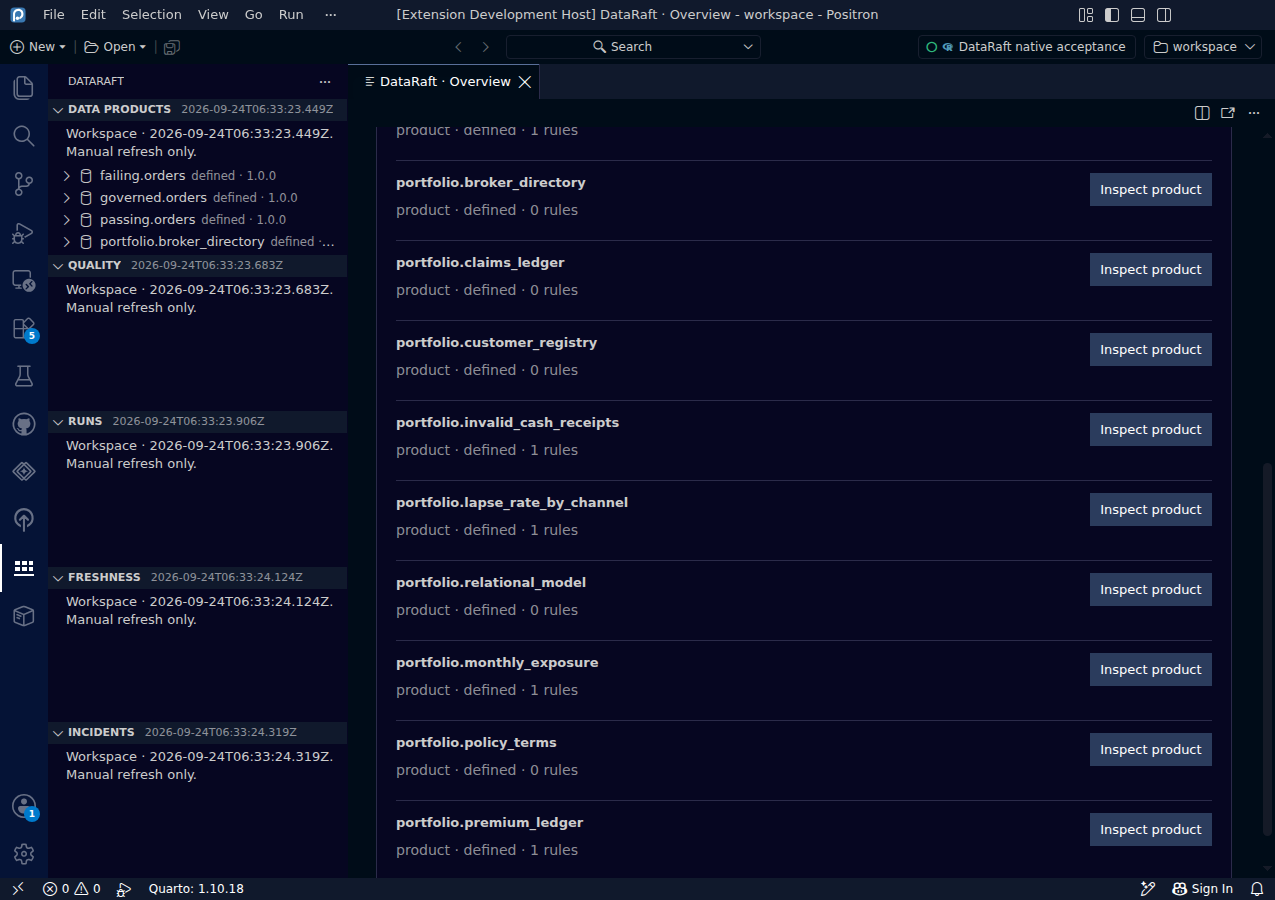
Select R Session → Refresh Metadata → Inspect Product → Trial Product
The problem
A portfolio analyst needs a monthly cancellation rate by distribution channel. Customer, broker, policy, status, payment and claim data arrive in different tables. An invalid negative receipt must not slip into reporting. Months later, the analyst needs to explain the input and rules behind a rate.
The synthetic case
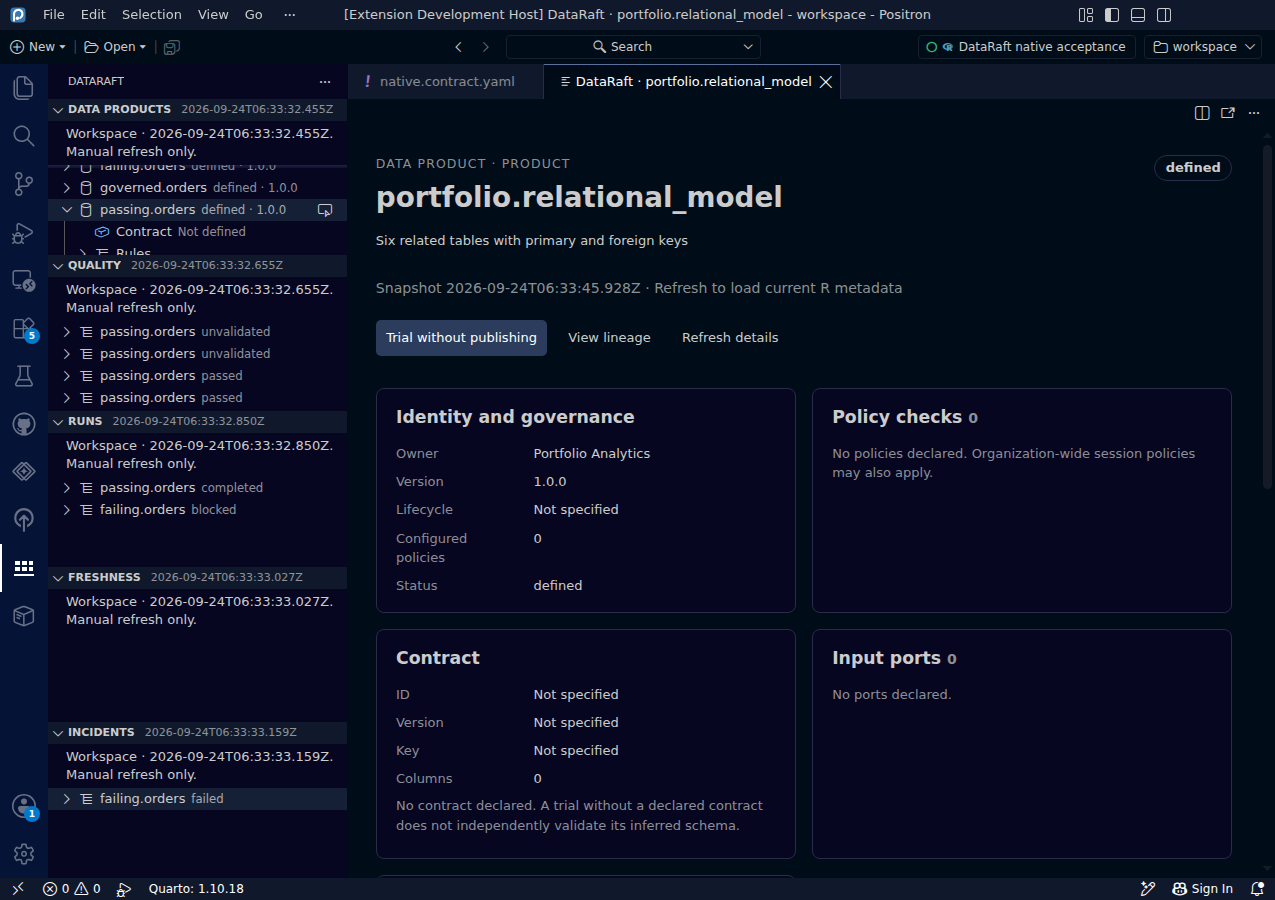
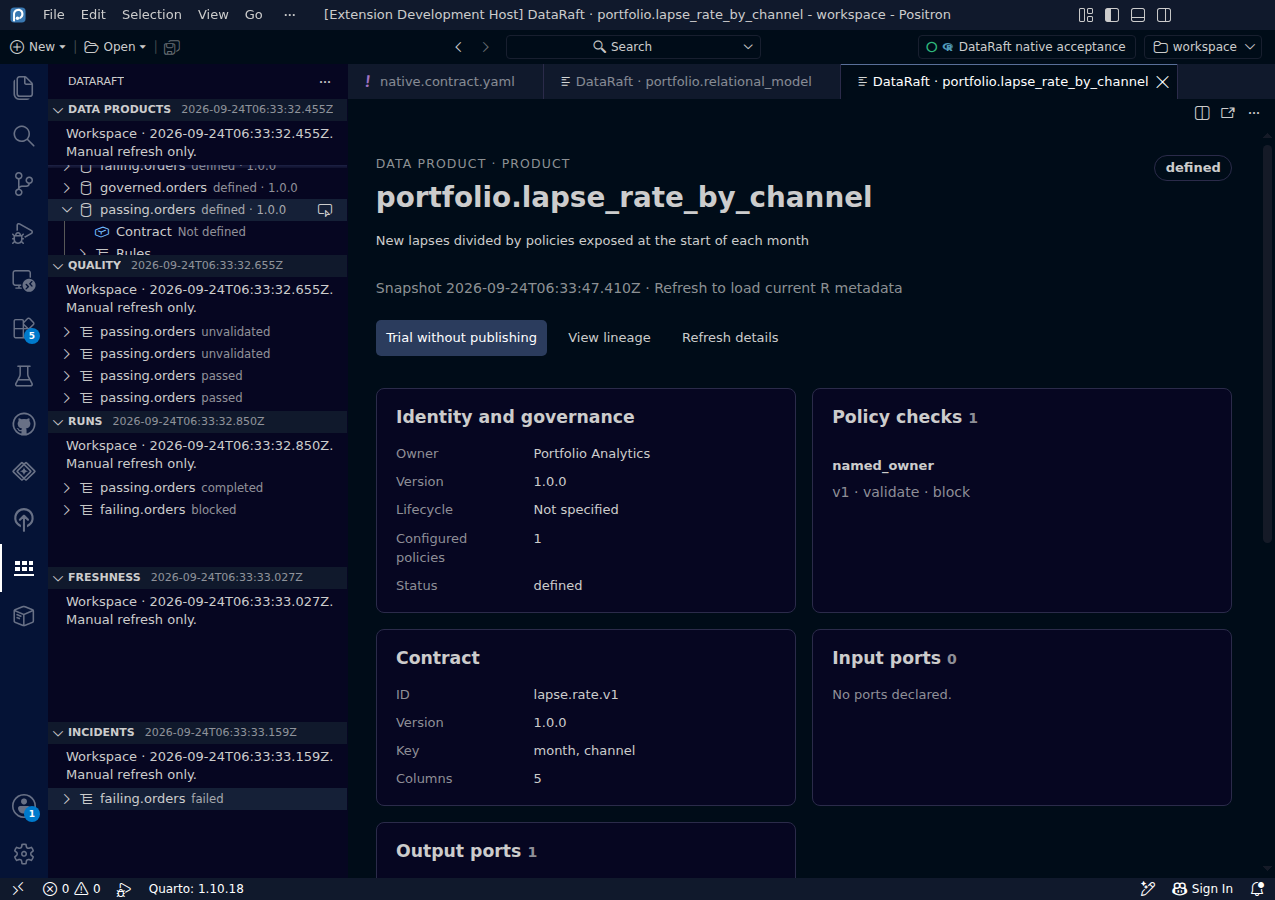
The versioned R example defines 18 customers, six brokers, 36 policies, 108 monthly status rows, 108 payment records and eight claims. Every table has a contract, including keys. A six-table dm model checks the relationships. Separate products add a blocked payment scenario, a channel lapse-rate calculation, a named owner policy and an output with an 08:00 UTC deadline. In March, four newly lapsed policies are measured against 33 policies exposed at the start of the month, giving 4/33 across all channels. The counts are deterministic regression expectations, not production data.
Try the native workflow
- Load the example into an R session and select that session in Positron.
- Refresh metadata and find the portfolio products in the overview.
- Inspect the relational model and the lapse-rate product's contract, policy, port and SLA.
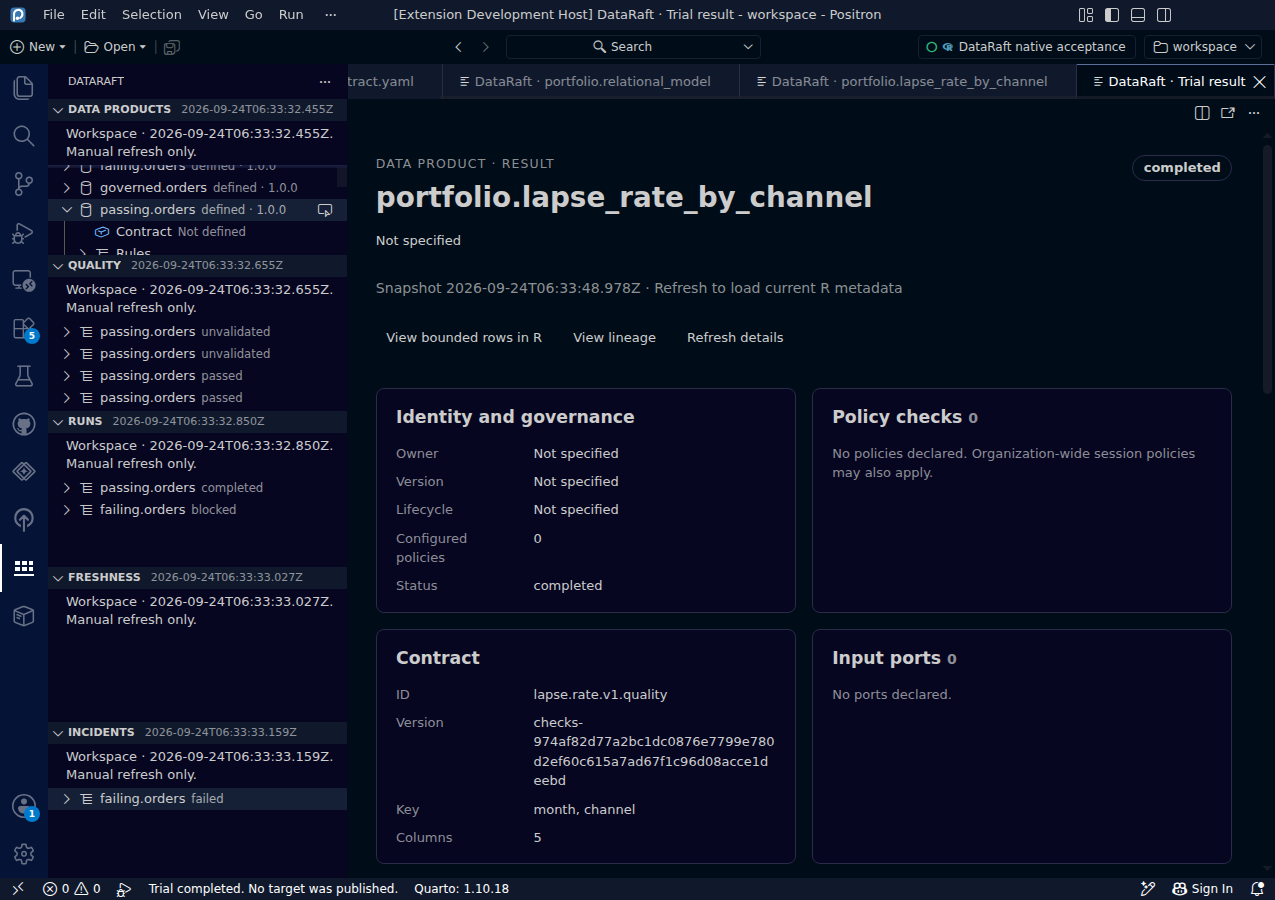
- Trial the lapse-rate product. Inspect the completed result without publishing.
- Trial
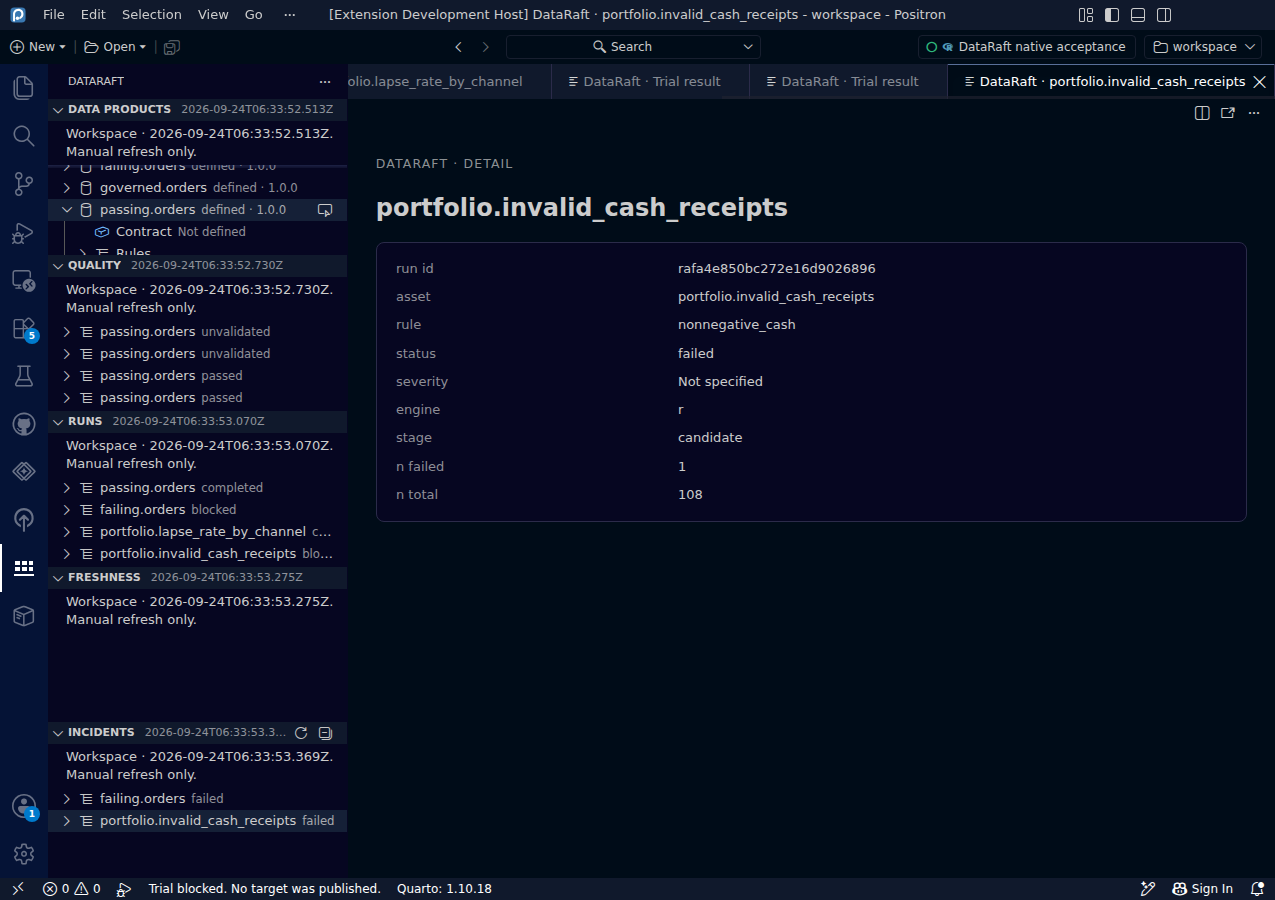
portfolio.invalid_cash_receipts, then select the failednonnegative_cashcheck. - Follow the directed lineage from the inputs to
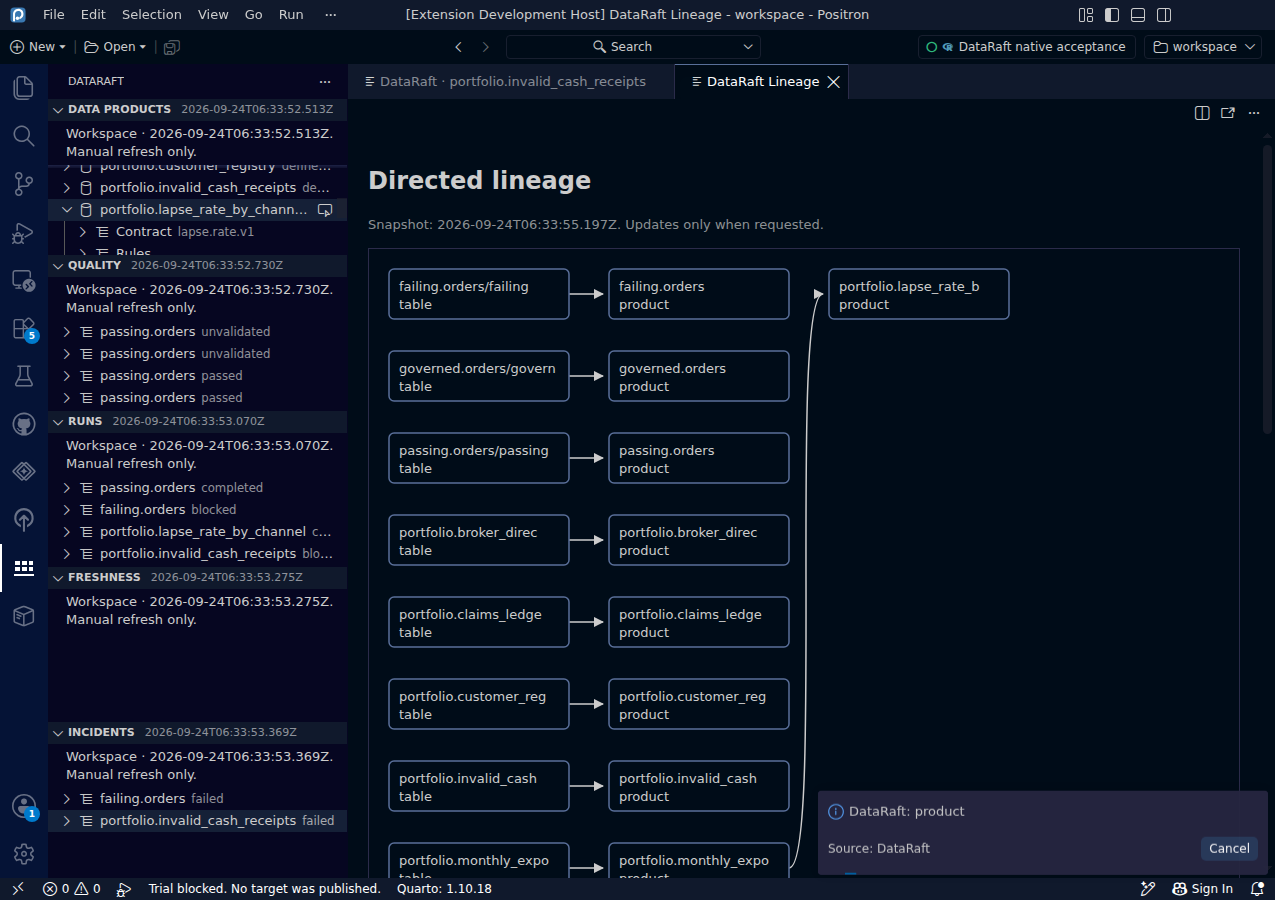
portfolio.lapse_rate_by_channel.
What the screenshots prove
The test drives the actual Positron workbench and production extension in one Ark R session. It asserts the successful and blocked result statuses, then checks that exactly one of 108 cash rows failed. The same installed example is exercised by the R package test suite for contracts, model relationships, bad deliveries and 4/33 arithmetic. The screenshots show metadata and UI state; they do not prove that an output was published or that a consumer received it.
a33652d. Screenshot automation: a33652d. Successful native capture run ↗